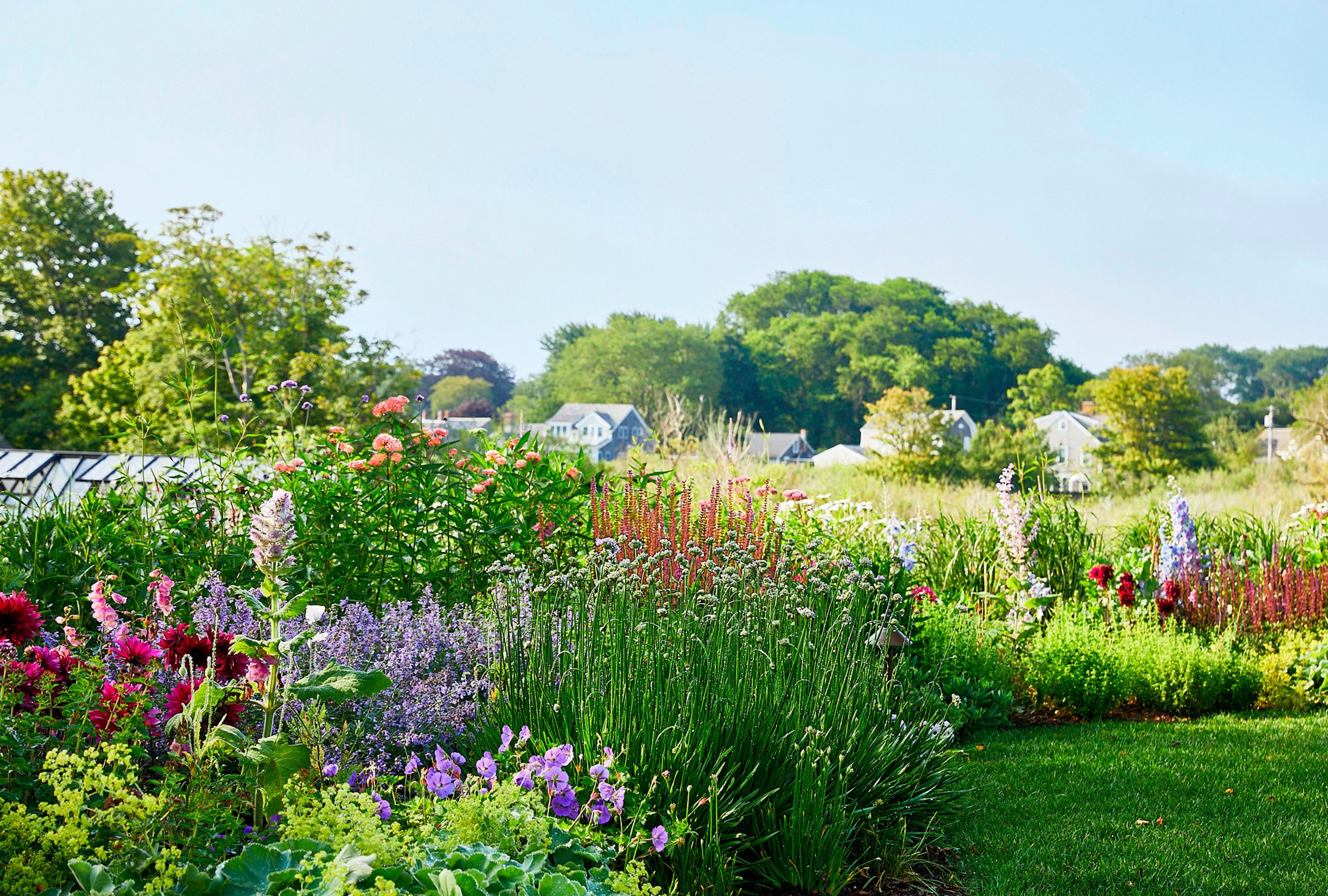
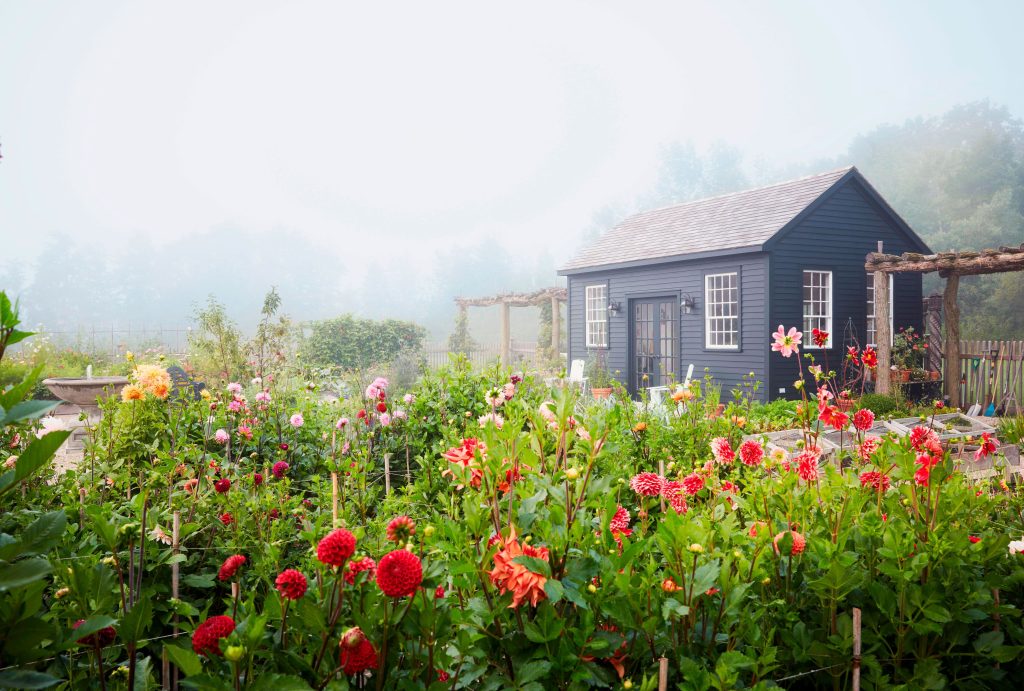
The enchanting garden at the Inn at Kenmore Hall is the collaborative masterpiece of fashion luminary Frank Muytjens and artist Scott Edward Cole. This elevated garden patch is both a bountiful source of edibles and a floral delight, offering a visual spectacle that captivates with its harmony of hues, textures, and forms, creating a visual cadence that dances with life.
A stroll through the garden of this historic inn, nestled in Richmond, Massachusetts, feels like walking into a living painting. Sprawling over 5,100 square feet, with 24 raised beds, the garden boasts a mesmerizing symphony of colors and textures, as vegetables, herbs, and blossoms intertwine in a chaotic ballet. The creative minds behind this oasis are the inn’s owners, Cole and Muytjens, who took inspiration from the “ordered chaos” of English gardens to craft their own retreat, sharing lessons on how to cultivate beauty in elevated garden beds.
The gardening journey begins amidst the winter chill. Muytjens explains, “We dedicates three days to planning the seasonal color narrative before planting, meticulously mapping everything on graph paper.” The flower selection often features cool hues punctuated by warm accents, as Cole notes, “to add visual contrast.” The duo kick-starts much of their garden under grow lights in their basement, from seeds.
The raised beds encircle a central fountain, with Cole explaining their aim for a balanced symmetry that avoids perfection. The varied mix of L-shaped and rectangular beds on either side introduces an element of surprise, avoiding monotonous sightlines. Conical boxwoods provide a permanent structural anchor in each section.
At the heart of the garden, a quaint, weathered French bistro set in yellow adds a touch of charm and offers a cozy spot for relaxation.
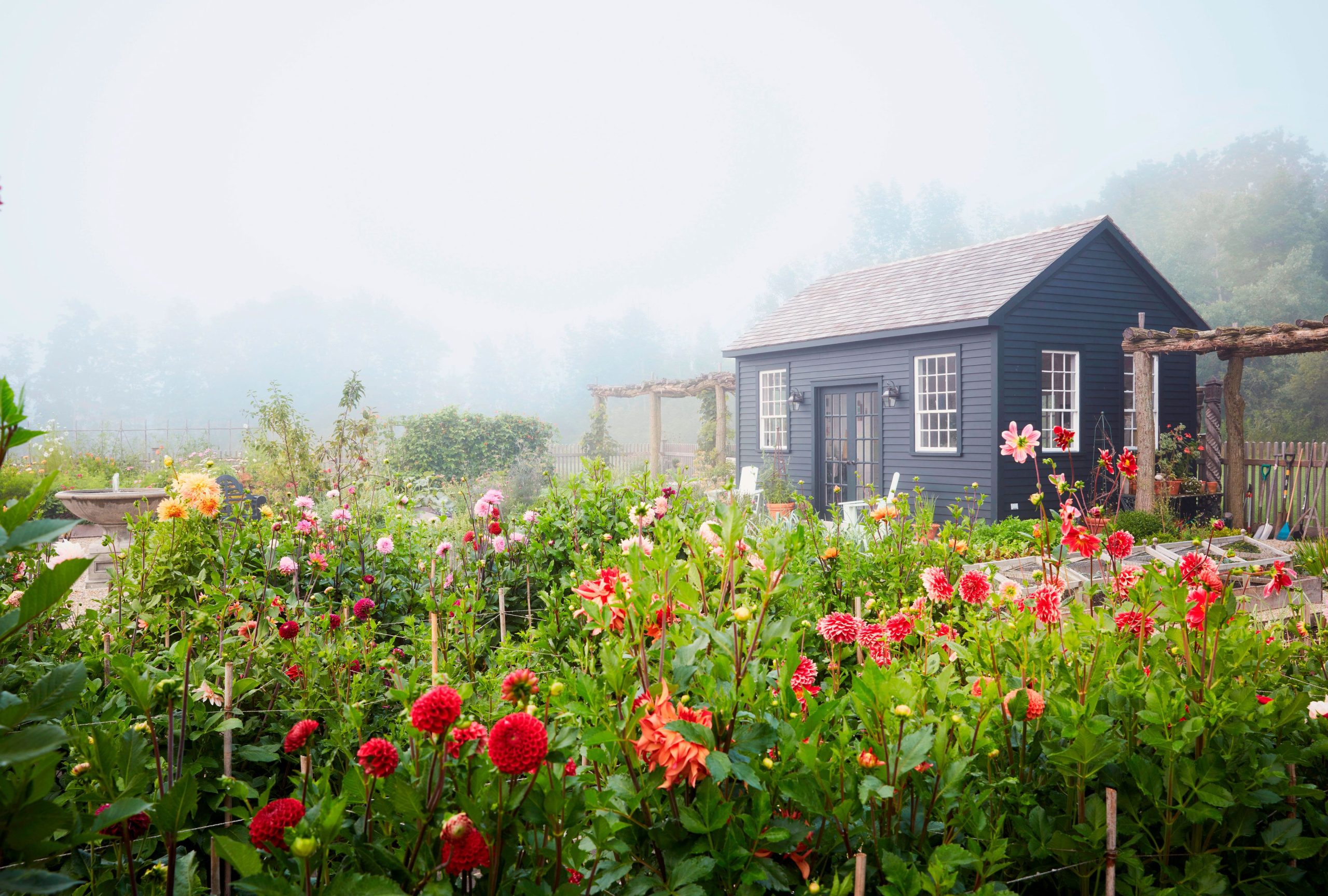
To complement the floral tableau, they’ve coated the garden cottage in a deep green (Benjamin Moore’s Black Forest Green). A vintage table by the cottage serves a dual purpose as a potting station and a decorative accent, with terra-cotta pots striking a visual note against the wall.
A border of oak leaf hydrangeas, azaleas, black lace elderberries, and other sequentially blooming perennials blurs the line between the garden and the wilder landscape beyond.
While the couple cultivates a rich variety of flowers, dahlias hold a special place in Muytjens’ heart. He not only nurses overwintered tubers but also adds new varieties each year, often waking up early to snag the latest releases from his preferred online retailers, Stonehouse Dahlias and River Merle Farm. He remarks on the intense demand, “You have to act the moment you lay eyes on your desired dahlia.”
Wooden structures and twiggy supports dotting the garden exude timeless appeal. The raised beds are crafted from local black locust, celebrated for its longevity, as Cole humorously notes, “In the Berkshires, they say it outlasts stone by a century.”
The gardeners artfully blend plants not just for companion planting benefits but also to play with contrasting shapes and textures. They cherish the garden’s wild exuberance as plants overflow, with sage spilling over, love-in-a-mist punctuating pathways, and fennel and globe amaranth tangling together. When they let broccoli bloom, it’s a deliberate choice. Muytjens concludes, “Sometimes we prioritize a plant’s beauty over its culinary use, just as it is.”