Versatile hydrangeas offer a charming English cottage garden vibe to any outdoor space. Enhancing their beauty is as simple as selecting the right companion plants to grow alongside them. Companion planting involves combining various plants that benefit each other. Here are some plants, as recommended by a seasoned garden designer, that make excellent companions to hydrangeas. While some are ideal for sun-loving hydrangeas, others are better suited to those that thrive in shade.
Laura Najman Janney, proprietor of The Inspired Garden in New Jersey, is a seasoned garden designer.
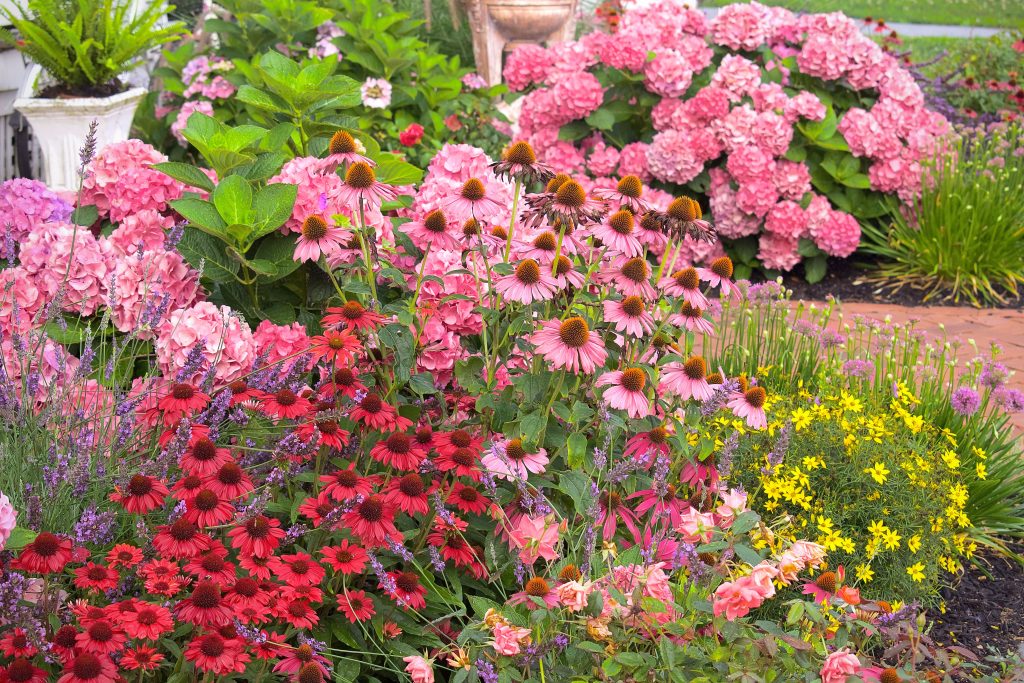
Most hydrangeas prefer filtered shade or morning sunlight, yet certain modern varieties like ‘Limelight,’ ‘Quick Fire,’ and ‘Moon Dance’ are bred for partial to full sun. When choosing companions, consider the sunlight requirements of your hydrangeas.
“Garden planning should prioritize plants’ growing needs above all,” advises Laura Najman Janney. “Novices might focus on color coordination, but the key is to select plants that share similar conditions for light and water.”
To create a lush garden, plant annuals like zinnias, poppies, and snapdragons in the empty spaces. “Opt for full, loose annuals and weave them into your garden,” suggests Janney. “While perennials take time to fill in, annuals quickly add a splash of color and abundance.”
Alliums, with their showy, globe-shaped flowers, make a dramatic statement alongside hydrangeas. “I’m fond of ‘Globemaster’ for its massive flowers,” says Janney. Allium, an ornamental onion, shares similar colors with hydrangeas and prefers well-drained soil and full sun, making it a great companion for sun-loving hydrangeas.
Growing Conditions: Full sun and well-drained soil
Size: 1 to 4 feet tall, 3 to 10 inches wide
Zones: 4–10
Astilbe is a perfect companion for shade-loving hydrangeas, with its plume-like blooms in various colors and fern-like foliage, providing a pleasant visual contrast. “Astilbe flowers before hydrangeas, extending your garden’s color palette,” notes Janney.
Growing Conditions: Part to full sun, shade-tolerant; loamy soil
Size: 6 to 24 inches tall, 12 to 60 inches wide
Zones: 3–8
For hydrangeas in full sun, consider bachelor buttons (Centaurea montana), which offer a classic cottage garden look, attract pollinators, and produce vibrant blue flowers. “They bloom before hydrangeas and keep going all summer if you deadhead and water them,” says Janney. Available in various colors, planting them en masse creates a colorful display. There’s also an annual variety (Centaurea cyanus) that complements hydrangeas well.
Growing Conditions: Part to full sun, well-drained soil
Size: 24 inches tall, 12 to 24 inches wide
Zones: 3–8
Boxwoods provide a classic, structural element to gardens, with their clean, geometric shapes offering a stark contrast to the organic forms of hydrangeas. They are easy to maintain, evergreen, and long-lived.
Growing Conditions: Part to full sun; loamy, well-drained soil
Size: 2 to 8 feet tall, up to 8 feet wide
Zones: 5–9
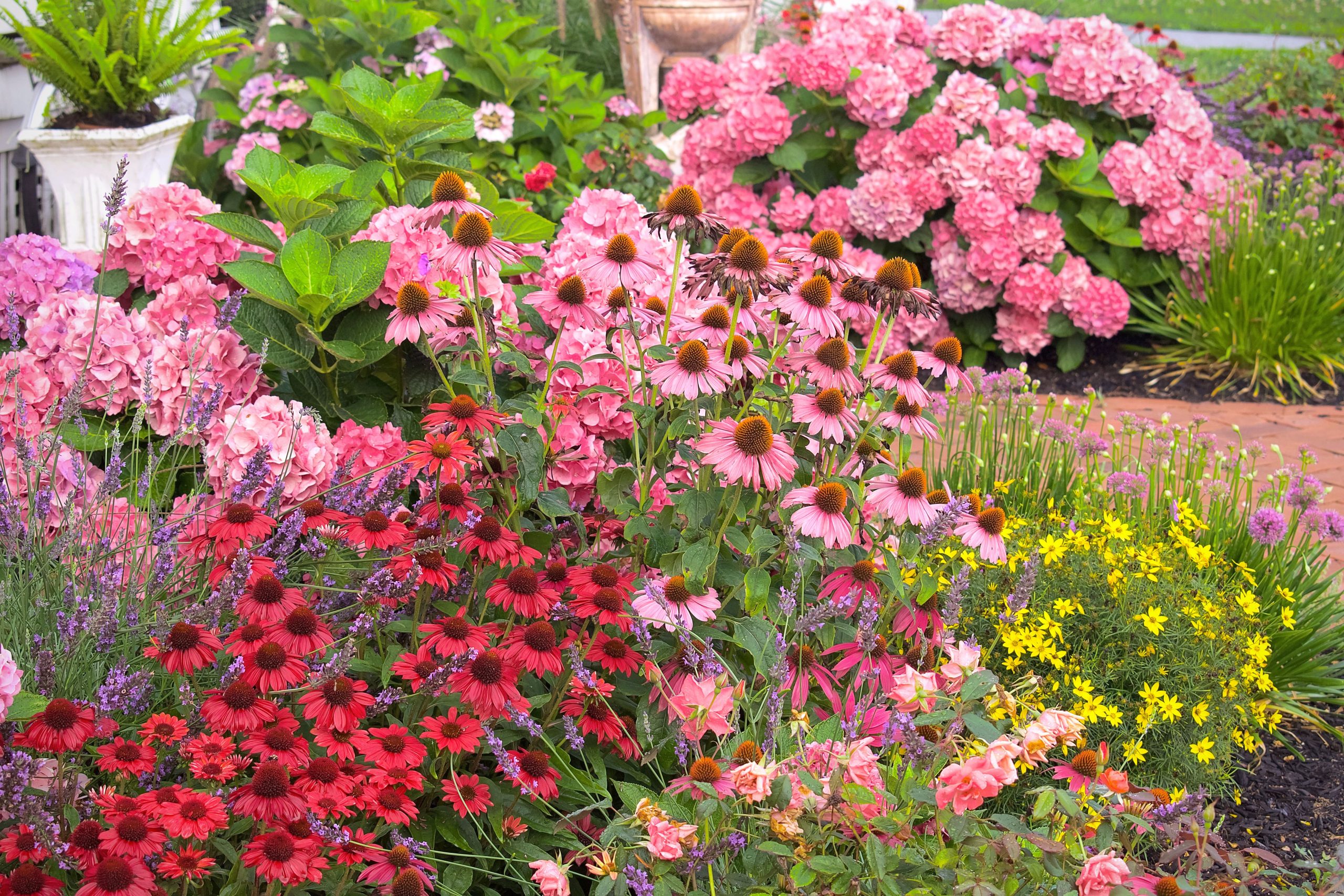
Coneflower (Echinacea) is a pollinator favorite and an excellent companion for sun-loving hydrangeas, with daisy-like blooms in a range of colors. Janney suggests mass planting them in borders for summer-long color. ‘Raspberry Truffle’ and ‘Pow Wow’ are deep pink varieties that also make great cut flowers.
Growing Conditions: Full to partial sun, loamy, well-drained soil
Size: 3 to 4 feet tall, 1 to 2 feet wide
Zones: 3–8
Coral bells (Heuchera) offer stunning foliage in a variety of colors and small bell-shaped flowers that attract butterflies and hummingbirds. They cover the ground, suppress weeds, and should be planted in groups of three.
Growing Conditions: Part to full sun, well-drained soil
Size: 8 to 18 inches tall, 12 to 14 inches wide
Zones: 4a–9a
Ferns add a beautiful green element to gardens, particularly in areas with blooming hydrangeas. Like certain hydrangeas, ferns prefer shade and can add interest when hydrangeas are not in flower. Lady ferns and Christmas ferns are recommended for their foliage and evergreen nature.
Growing Conditions: Part sun to shade, well-drained soil
Size: 1 to 3 feet tall and wide
Zones: 2–10
Perennial geranium, or cranesbill, is known for its small, gem-like flowers and low, mounding habit, making it an excellent choice for groundcover alongside hydrangeas.
Growing Conditions: Full sun to shade, average soil
Size: 9 inches to 2 feet tall, 1 to 2 feet wide
Zones: 4–8
Geum, or avens, is a perennial with early spring blooms and dark green leaves that thrives in shade and moisture, similar to hydrangeas. It provides color early in the season and continues to flower throughout summer.
Growing Conditions: Part shade to full sun, loamy soil
Size: 9 to 18 inches tall, up to 18 inches wide
Zones: 5–7
Hosta, with its bold foliage, complements hydrangeas beautifully, particularly in mixed or woodland borders. However, Janney cautions that hostas can be a magnet for deer.
Growing Conditions: Part sun to shade, well-drained soil
Size: 6 to 48 inches tall, 1 to 5 feet wide
Zones: 3–9
Phlox and hydrangeas make a classic English garden pair, with phlox offering similar shades and a similar clustered bloom appearance. Depending on the variety, phlox can serve as groundcover or grow quite tall.
Growing Conditions: Part shade to full sun, moist soil
Size: 9 inches to 4 feet tall, up to 24 inches wide
Zones: 4–8
Speedwell (Veronica spp.) produces spikes of flowers in various colors and is adaptable to different conditions, with both groundcover and taller varieties available. It offers a nice contrast to hydrangea blooms.
Growing Conditions: Part shade to full sun, loamy soil
Size: 3 to 48 inches tall, 18 to 24 inches wide
Zones: 3–9
Spirea is a spring-blooming shrub that complements hydrangeas, especially the taller varieties that can provide shade for them. There are various spirea options, including the compact ‘Blue Kazoo’ and medium-sized ‘Goldflame,’ as well as the larger Double Reeves spirea.